This is default featured slide 1 title

Go to Blogger edit html and find these sentences.Now replace these sentences with your own descriptions.

This is default featured slide 2 title

Go to Blogger edit html and find these sentences.Now replace these sentences with your own descriptions.

This is default featured slide 3 title

Go to Blogger edit html and find these sentences.Now replace these sentences with your own descriptions.

This is default featured slide 4 title

Go to Blogger edit html and find these sentences.Now replace these sentences with your own descriptions.

This is default featured slide 5 title

Go to Blogger edit html and find these sentences.Now replace these sentences with your own descriptions.

Selasa, 29 September 2015

New 'hog-nosed rat' discovered in Indonesia

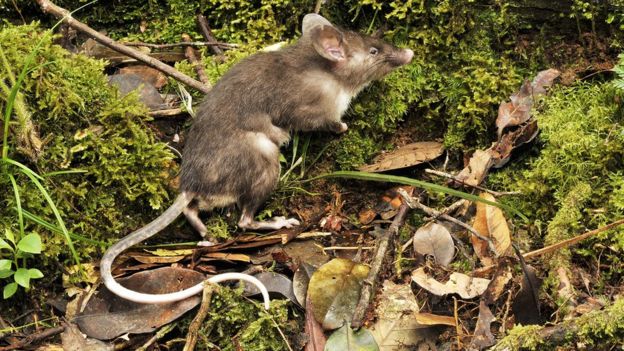
A team of scientists have discovered a new species of rat in Indonesia.
The species, which has been named Hyorhinomys stuempkei - hog-nosed rat - has "distinct and unique features uncommon to other rats", they said.
Five of the rodents were discovered on Sulawesi island earlier in January by researchers from Australia, Indonesia and the US.
Museum Victoria's mammal curator Kevin Rowe said the species was "previously undocumented".
"We were on a mission to survey remote mountains in the area and to put evolution in Asia and Australia into context," Mr Rowe said.
"Nothing is currently known about these rats and how widely they were distributed throughout the forests."


'Remarkable morphological evolution'

Mr Rowe, who specialises in rodent evolution, spent six weeks in Indonesia with other scientists and a group of locals trying to reach the remote forest area.
He also shared with the BBC the "exciting moment" of finding a hog-nosed rat.
"We had been setting up overnight traps for a few days - that was when I stumbled upon a completely new rat," he said.
"I hollered immediately for my colleagues as I knew it was a new species."
The rats appeared "healthy, with full stomachs", weighing at an estimated 250g.
Mr Rowe also added that there were rats on Sulawesi island similar to the newly discovered mammal, but they "weren't the same".

Senin, 28 September 2015

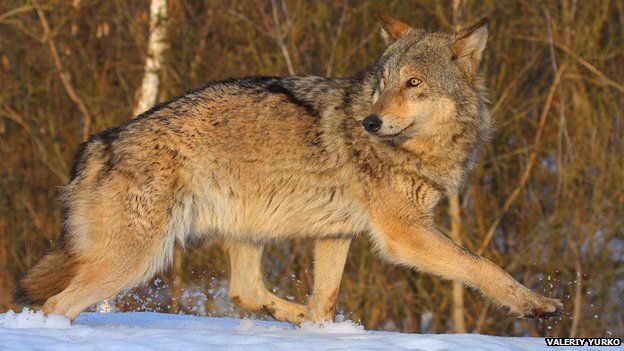
Wild mammals 'have returned' to Chernobyl


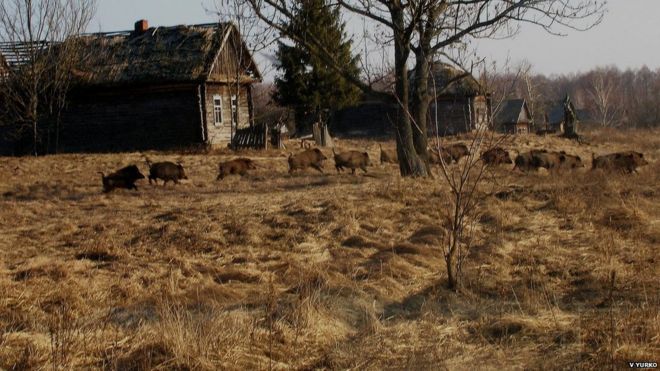
Removing humans from what is now the exclusion zone around the damaged Chernobyl nuclear reactor has allowed wildlife to return, researchers say.
They say a long-term census of mammals in the area has shown that wildlife numbers are likely to be "much higher than they were before the accident".
Professor Jim Smith of the University of Portsmouth led the study, published in the journal Current Biology.
He stressed that this "does not mean that radiation is good for wildlife".
"It's just that the effects of human habitation, including hunting, farming, and forestry, are a lot worse," Prof Smith said.
With the help of with colleagues from the Polesky State Radioecological Reserve in Belarus, the researchers examined data from aerial surveys that counted large mammals including roe deer, elk, wild boar and wolves.
They also carried out tracking studies in the winter - using footprints in snow to calculate the numbers of different mammal species. And measuring the levels of radioactive contamination in those tracks.
"The numbers of animals we see in Chernobyl is similar to the populations in uncontaminated nature reserves," Prof Smith said.
The number of wolves was particularly striking - up to seven times higher than in nearby nature reserves of a comparable size. Prof Smith attributed this to the lack of hunting in the exclusion zone.
A 30km exclusion zone now surrounds the infamous Chernobyl nuclear power plant. And Prof Smith says the picture from this study reveals what happens in terms of wildlife conservation "when you take humans out of the picture".
But, he said, the study did not look at the health effects of radiation on individual animals.
That is something that Prof Tim Mousseau from the University of South Carolina, has spent many years trying to unpick in his studies of wildlife - particularly bird populations - in the exclusion zone.

Prof Mousseau said the study was a "very positive move forward in conducting research concerning the potential health and environmental impacts of nuclear accidents".
"Much more research on this is desperately needed," he added.
But Prof Mousseau is also troubled by "the characterisation that Chernobyl and the surrounding area is teeming with wildlife".
"This study only applies to large mammals under hunting pressure, rather than the vast majority of animals - most birds, small mammals, and insects - that are not directly influenced by human habitation," he told BBC News.

Plant uses raindrops to eat ants


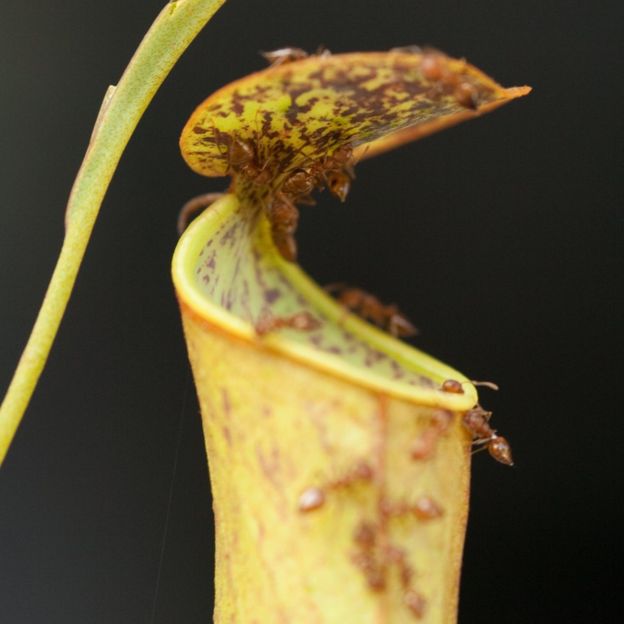
A carnivorous pitcher plant uses power from falling raindrops to fling ants to their doom, biologists have discovered.
The team, from the University of Bristol, found that raindrops kick off very fast vibrations in the lid of the plant's jug-shaped leaves.
This propels ants from the lid into the pitcher trap below, where they drown and are consumed by digestive juices.
The findings, published in the journal PNAS, are based on high-speed cameras and laser vibration measurements.
Using these instruments, Dr Ulrike Bauer and her colleagues recorded extremely fast movement in the lid of the pitcher leaf, after it was hit by a raindrop.
It wobbles like a stiff spring, she said.
"You have a raindrop hitting the surface and that causes it to move down, fast. Then because of this spring property, it moves to a certain point and springs back.
"You get an oscillation, very similar to when you put a ruler on the edge of your desk and flick the end down with your finger."


New moves

This movement is unique in the plant kingdom, Dr Bauer said - partly because of its speed, which easily outstrips the insect-trapping manoeuvres of other carnivorous plants, and partly because of the way it exploits an external energy source.
"Having a fast movement in a plant is unusual in itself," she explained, "but having a fast movement that doesn't require the plant to invest any energy - it just requires it to build the structure - that's something quite surprising."
The findings place the species in the study, Nepenthes gracilis, into its own carnivorous category; it belongs neither with "active" carnivorous plants, like flytraps, nor motionless "passive" insect eaters - like most other pitcher plants.
Key to the pitcher's rain-powered trap is the stiffness of its lid. When the team studied another species, which catches ants using only the slippery rim of its pitcher, they found it had a more bendy lid.

Minggu, 27 September 2015

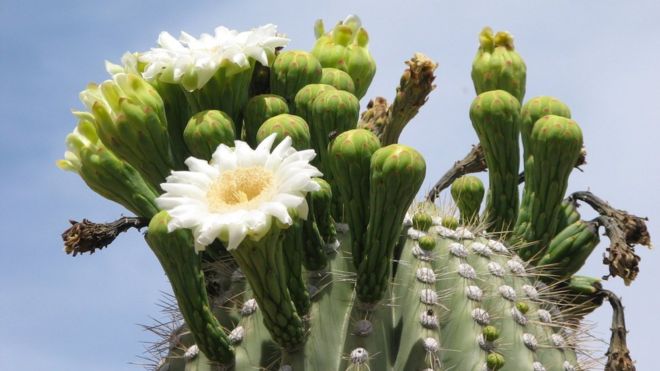
Cacti facing extinction, study warns


Almost one-third of cactus species are under threat as a result of over-harvesting and illegal trade in the plants, a global study has concluded.
Conservationists voiced concern, saying the level of threat to cacti was much greater than previously thought.
The plants are a vital component of arid ecosystems, providing a source of food and water for many animals.
The results of the assessment by the International Union for Conservation of Nature appear in Nature Plants journal.
According to the study, 31% of the world's 1,480 cactus species were under pressure from human activity, such as illegal trading, agriculture and aquaculture as well as land-use change.
"The results of this assessment come as a shock to us," said lead author Barbara Goettsch, co-chairwoman of the IUCN's Cactus and Succulent Plant Specialist Group.
"We did not expect cacti to be so highly threatened and for illegal trade to be such an important driver of their decline."
The assessment reported that the illegal trade of live plants and seeds for the horticultural industry and private collections, as well as their unsustainable harvesting, affected 47% of threatened species.
These plants which have evolved to cope with the harsh conditions found in arid landscapes are native to North and South America, with exception of one species that is native in southern Africa and South Asia.

Sabtu, 26 September 2015

London Film Festival to open with focus on women in film


Final preparations are under way for the opening of the London Film Festival which, this year, puts the focus on the role of women in film.
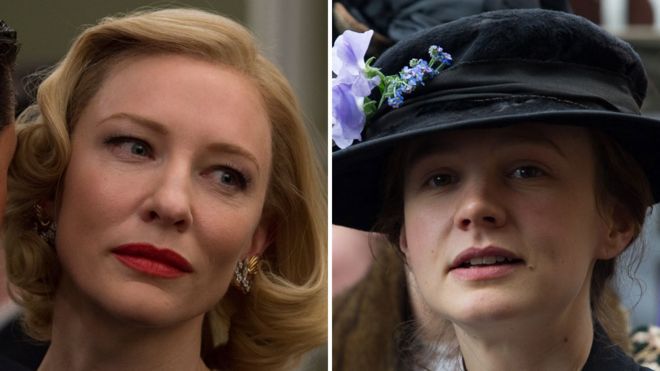
Carey Mulligan, Meryl Streep and Helena Bonham Carter will be among the stars on the red carpet later for the gala screening of period drama Suffragette.
Some 240 feature films from 72 countries will screen over 12 days.
Festival director Clare Stewart declared the 2015 programme as "the year of the strong woman".
"I'm thrilled that the opening night film has enabled us to draw attention for what it means for women to be working behind the camera, as well as stoke debate around strong roles for women and girls in front of the camera," Stewart told the BBC.
She described Suffragette as "a film made by British women about British women who change the course of history".
Joining the stars on the red carpet in Leicester Square will be Helen Pankhurst, the great grand-daughter of women's rights activist Emmeline Pankhurst (played by Streep) and Laura Pankhurst, the great great grand-daughter of the suffragette leader.

Rihanna opens up about Chris Brown assault


Pop star Rihanna says she feels she has been "punished over and over" by the attention surrounding her assault at the hands of ex-boyfriend Chris Brown.
The singer has opened up about the repercussions of the 2009 incident in an interview with Vanity Fair.
Pictures of her bruised face surfaced after the assault in Brown's car.
Asked about becoming "a poster child for victims of domestic abuse", she said she felt forced to relive the "very serious" incident by the media.
She told the magazine: "Well, I just never understood that, like how the victim gets punished over and over. It's in the past, and I don't want to say, 'Get over it,' because it's a very serious thing that is still relevant; it's still real.

"A lot of women, a lot of young girls, are still going through it. A lot of young boys too. It's not a subject to sweep under the rug, so I can't just dismiss it like it wasn't anything, or I don't take it seriously.
"But, for me, and anyone who's been a victim of domestic abuse, nobody wants to even remember it. Nobody even wants to admit it.
"So to talk about it and say it once, much less 200 times, is like… I have to be punished for it? It didn't sit well with me."
Brown was sentenced to five years of probation following the assault. But the pair got back together in 2012, and Rihanna told Vanity Fair she thought she could change him.
"I was that girl who felt that, as much pain as this relationship is, maybe some people are built stronger than others," she said. "Maybe I'm one of those people built to handle [things] like this.
"Maybe I'm the person who's almost the guardian angel to this person, to be there when they're not strong enough, when they're not understanding the world, when they just need someone to encourage them in a positive way and say the right thing.

Jumat, 25 September 2015

Anti-Renoir protesters picket Boston art gallery


Protesters have demonstrated outside a Boston art gallery that is showing work by Pierre-Auguste Renoir, complaining that he "sucks at painting".
The group held placards bearing slogans like "God hates Renoir" and "Aesthetic terrorism" at the Museum of Fine Arts.
The protest was organised by the "Renoir Sucks At Painting movement", who say the French impressionist's work does not deserve to be on show.
They claim it will be "the first of many anti-Renoir direct actions".
In a statement on Instagram, the group said: "The MFA's decision to hang Renoir paintings, considering the fact the museum has masterpieces by actually talented artist [sic] in storage, is a curatorial failing, and amounts to an act of Aesthetic Terrorism."

'Deformed pink fuzzy women'

The Associated Press reported that the museum would not comment and that the demonstrators acknowledged they were being ironic.
The Boston Globe reported that they chanted: "Put some fingers on those hands! Give us work by Paul Gauguin!" and "Other art is worth your while! Renoir paints a steaming pile!"
The protest is being led by Harvard stem cell scientist Dr Ben Ewen-Campen, who wrote: "Seeing Renoirs in the MFA makes me sad.
"All the other art in the museum is great - Manet, Van Gogh, Singer Sargent, they're great! But then we get exposed to Renoir's deformed pink fuzzy women and scary looking babies. It really detracts from the overall experience."